Sulphuric vs Hard Anodising: Which Finish Does Your Part Need?
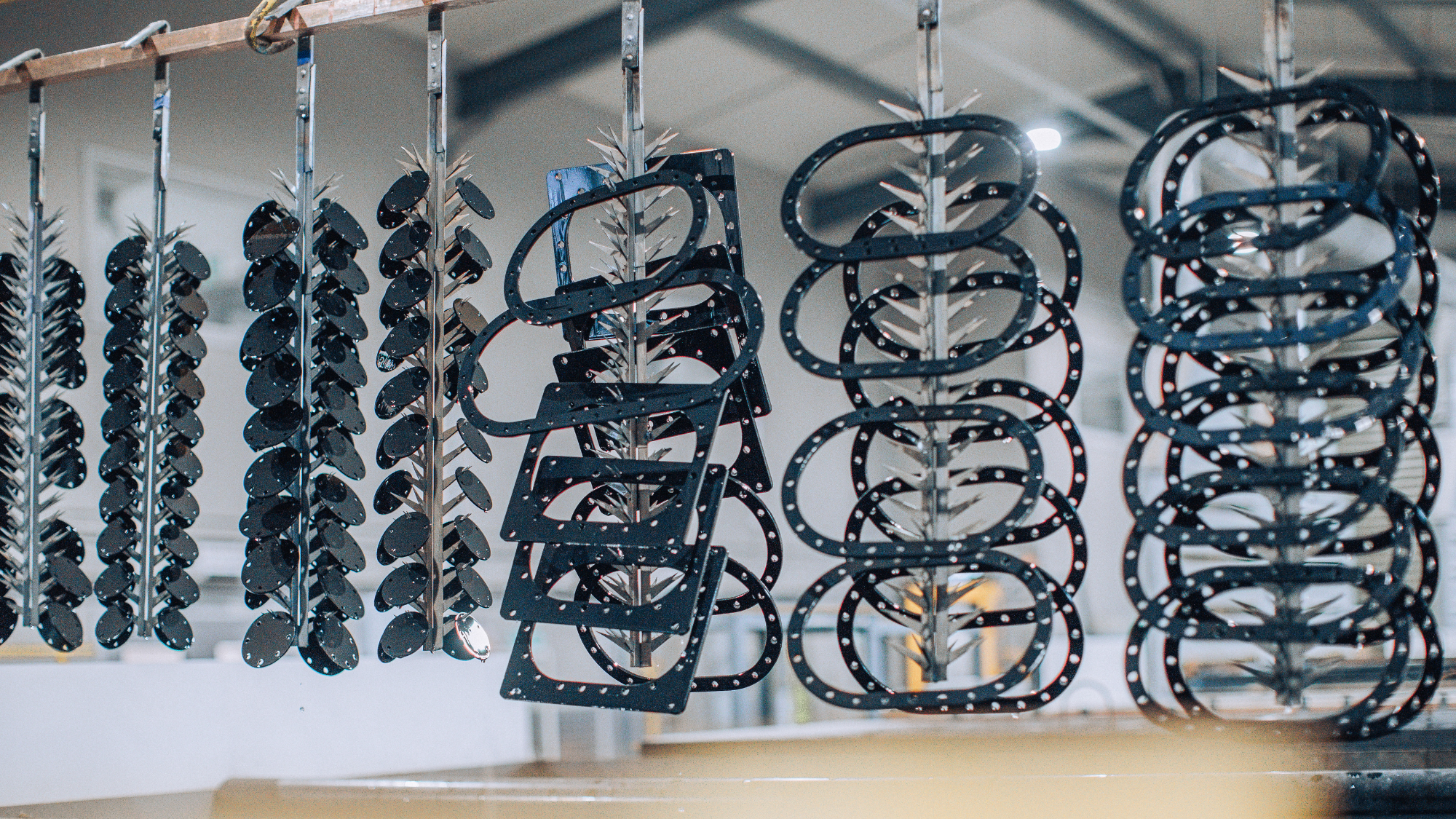
Sulphuric and hard anodising both grow an oxide layer from the aluminium itself. Both processes pass electricity through the part while it sits in a sulphuric acid solution. Oxygen from the solution reacts with the metal surface to form the coating.
The two processes differ in how thick that layer gets and what it can withstand. When you weigh up sulphuric vs hard anodising, start with what your part has to do in service.
How the processes differ
Both processes run in a sulphuric acid bath, but hard anodising changes the conditions. It uses a more concentrated sulphuric acid, a chilled bath and a higher voltage. These controlled conditions build a thicker, denser coating that resists wear far better.
Sulphuric anodising, often called soft anodising, produces a thinner layer that takes dye well. That makes it the better choice for parts where colour and appearance matter.
Side-by-side comparison
| Sulphuric anodising | Hard anodising | |
|---|---|---|
| Coating thickness | 5 to 25 microns | 25 to 50 microns |
| Process | Standard bath | More concentrated acid, chilled bath, higher voltage |
| Main purpose | Decorative finish with corrosion resistance | Wear and corrosion resistance |
| Colour | Clear, black and other colours | Clear, with black and red the most popular colours |
| Typical parts | Electronics enclosures, extrusions, panels, covers | Valve parts, slides, gears, hydraulic components |
When to choose sulphuric anodising
Sulphuric anodising suits parts that need a good-looking finish with some corrosion protection. Typical examples include enclosures for ruggedised electronics, aluminium extrusions, front panels and covers. It also works well when your customer has specified a particular colour.
For coloured parts, we recommend a coating of at least 15 microns. A thicker coating takes dye more evenly and gives better corrosion resistance.
When to choose hard anodising
Hard anodising suits parts that rub, slide or work in harsh conditions. The thicker coating gives far better wear resistance, so it suits industrial metal parts that see constant use. You’ll often see it on valve and hydraulic components, sliding surfaces and outdoor equipment.
Hard anodised coatings come out darker than sulphuric ones, which limits the colour range. Most hard anodised parts finish clear, black or red.
Allow for coating growth
About half of any anodised coating builds outward from the original surface. A 40 micron hard anodised coating therefore adds around 20 microns to each surface. A 10 micron sulphuric coating adds only around 5 microns.
Because hard anodising builds more material, it has a bigger effect on tight tolerances and threads. You can allow for this at the design stage or mask the critical features.
The sealing process
A freshly anodised coating is porous. The sealing process closes those pores, which locks in dye and helps improve corrosion resistance. Most sulphuric anodised parts are sealed after anodising.
Hard anodised parts may stay unsealed when wear resistance matters most. Sealing can slightly reduce surface hardness, so the choice depends on how the part will be used.
Points that apply to both
- Pure aluminium anodises well, but most metal parts use stronger alloys. The 6000 and 7000 series give the best results.
- Alloys with more than 4% copper or 7% silicon usually anodise poorly.
- You can anodise castings, although the finish quality is typically lower.
- Sharp edges need a small radius because the coating struggles to form on a sharp corner.
- Blind holes usually receive a thinner coating than the outer surfaces.
- Every part needs a jig contact point, so show on your drawing where a mark is acceptable.
- Alloy grade affects the final shade, so agree a colour tolerance before the first batch.
How Milturn can help
We offer both sulphuric and hard anodising in-house, working to BS ISO 7599. We also machine parts on site, so one supplier controls your finished part. Our team uses XRF equipment to check coatings meet the specific thickness on your drawing. We handle masking, vapour blasting and etching on site too.
We process batches from a single part up to thousands of components. For sulphuric anodising, we can take parts up to 3m x 1m x 1m.
Send us your drawing, and we’ll quote within 24 hours. Get a quote